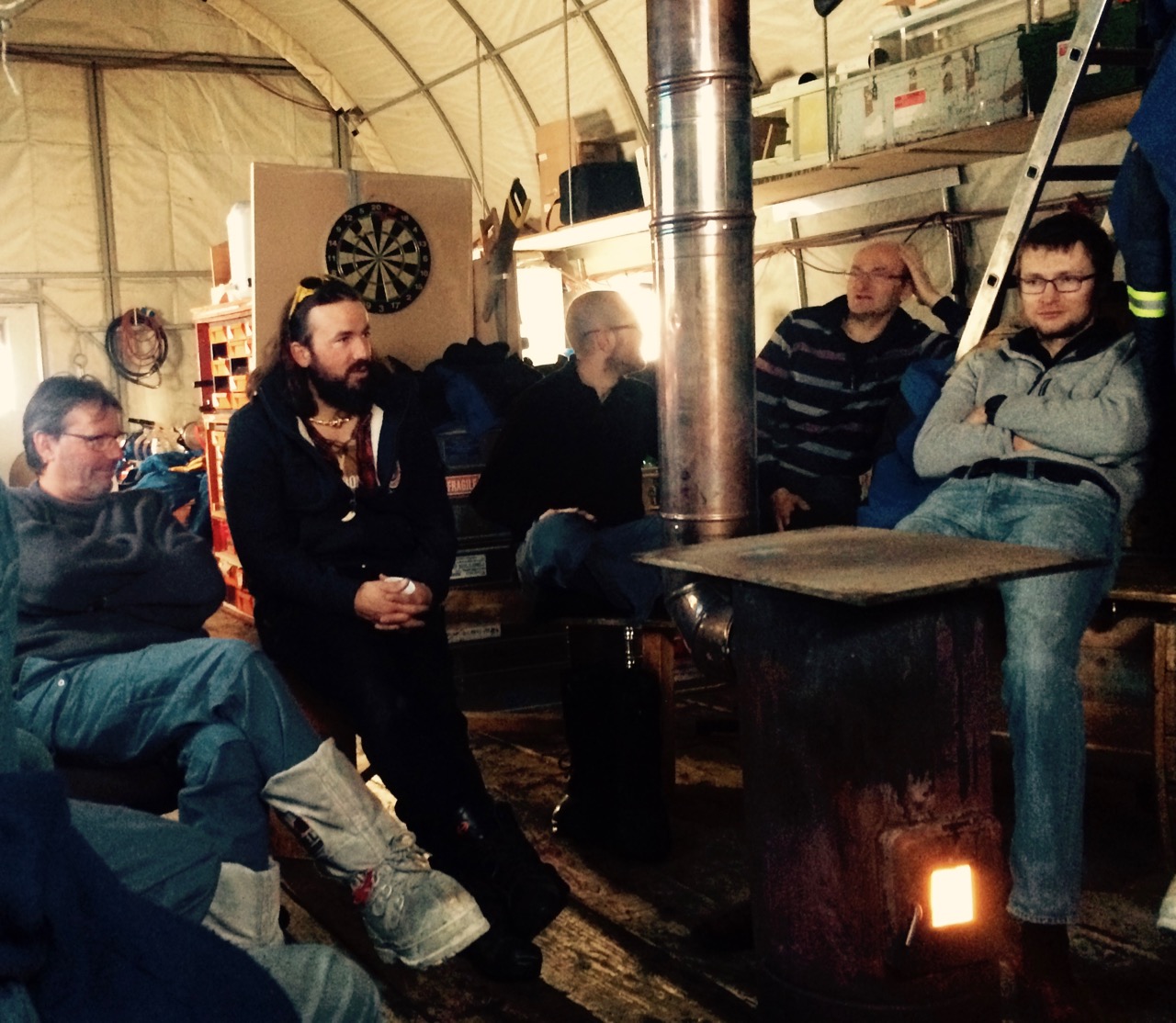
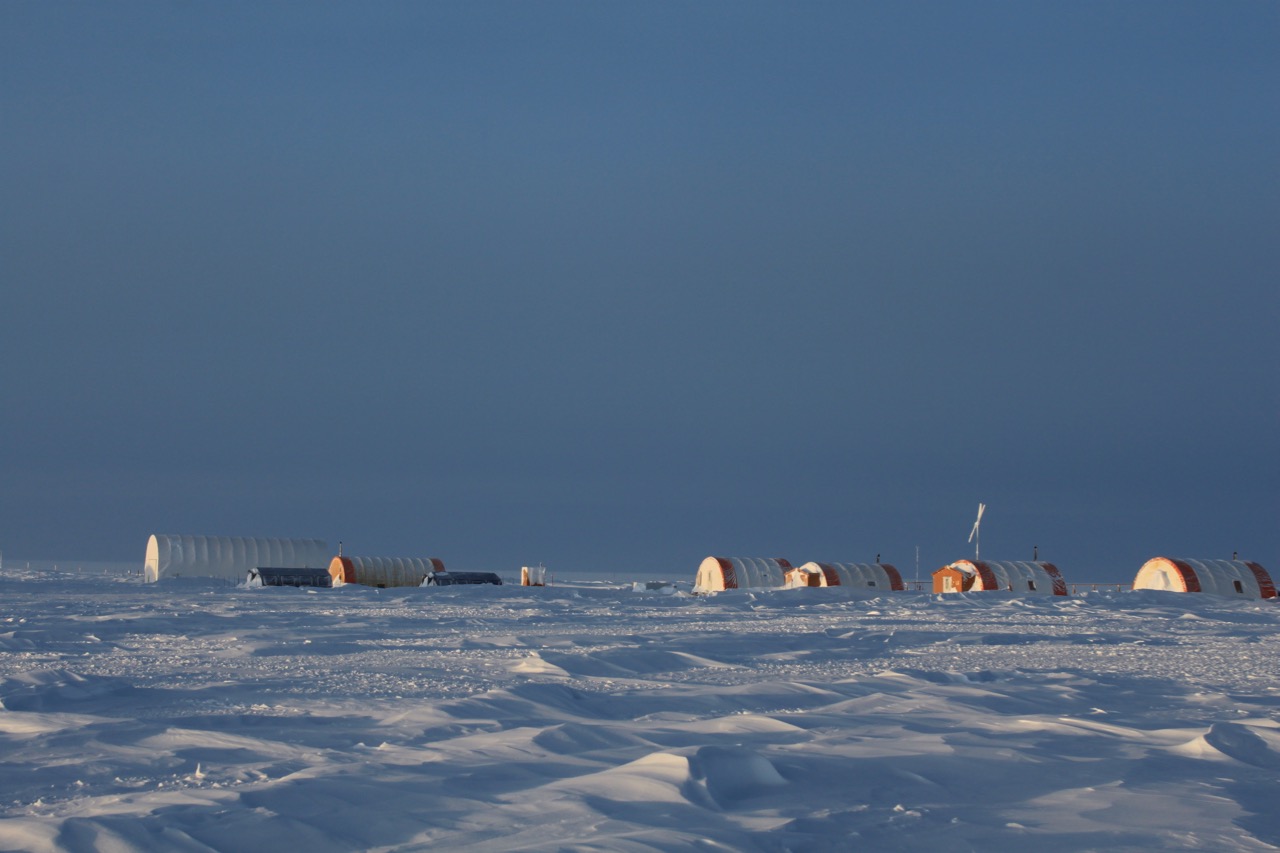
There are so many names to remember at first! At the apex of the summer campaign, there will be 90 of us living on the station, some sleeping inside Concordia itself but most in various heated “tents” and the summer camp. The latter is a row of containers transformed into rooms and dorms, and equipped with a kitchen, showers and a laundry room. As not everyone from my winter-over crew has arrived yet, and various reagents for the experiments are still on their way, I don’t have too much work at the beginning and get a bit of time to adjust to the new environment. I am curious about everything and take every opportunity I can to understand how the station “works”.
I meet the plumbers, and help them out as best I can when they have to clean one of the recycled water tanks. I visit the workshop, the garage, the menuiserie and chaudronnerie. I help shuffling the contents of some of the dozens of containers disposed around the station and which are convenient long-term storage space. I often walk to the Epica (European Project for Ice Coring in Antarctica) tent and watch the glaciologists work; I like seeing the progression of the new drilling site, and as an added bonus warm tea, cookies, and colorful stories from previous years always reward these visits… I marvel at the ‘tubosider” and its stalactites; it is a constant minus 50°C in this underground tunnel, which is extremely useful for storing biological samples and ice cores.
I even get to drive a Caterpillar D4D (lovingly nicknamed the “bulle”), a bulldozer from another era, to help level a snowfield where new antennas will be installed for the SuperDARN project (Super Dual Auroral Radar Network). Whilst climbing on the American tower, 44 meters high and equipped with multiple weather instruments (including for ESA), I have the chance to get a different vintage point on the station. It looks tiny from up there!
As my breathing gets easier and easier in the rarefied atmosphere (we have about 620-630 hPa, compared to 1013.25 hPa at sea level), I venture further and further out. You have to be careful though, as some areas are “no-go” zones, either because the snow must stay pure for sampling and subsequent analyses, or because you risk disturbing very precise and sensitive seismology equipment. Although at first the polar suit feels awkward and bulky, it quickly becomes second nature to take a good 5 minutes to dress myself before poking my nose out. I also learn at my own expanse that not wearing grade IV tainted glasses all the time is a sure-way to get severe headaches, as the sun’s reflection on the snow is particularly harmful, and the thin ozone layer over the Antarctic doesn’t do much to protects us from solar radiation. Yet nothing will keep me from taking my daily breath of (very) fresh air!
 75 Degrees South