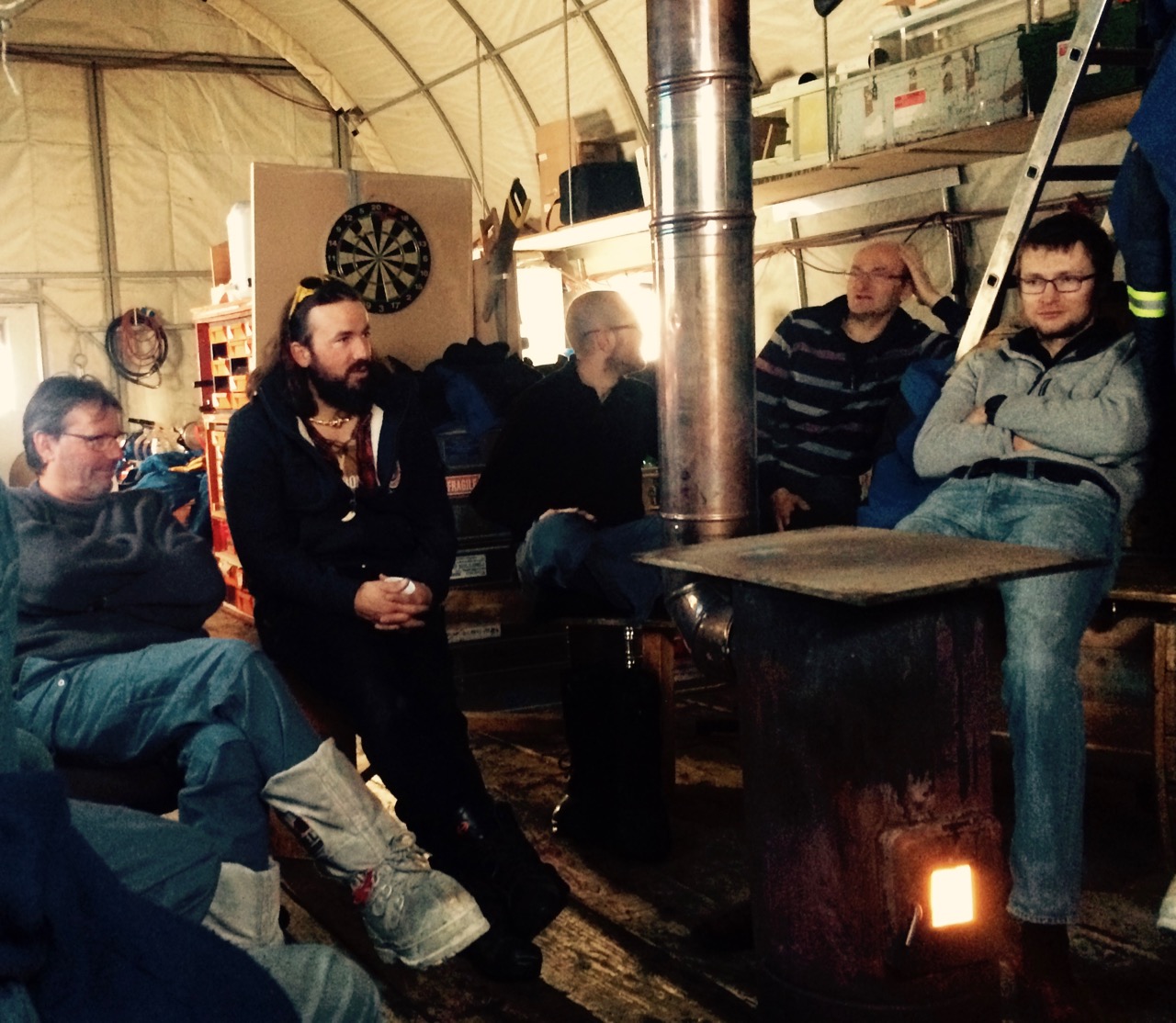
The summer campaign is an amazing opportunity to learn about jobs and scientific projects you would otherwise likely never have heard of. A few evenings are dedicated to conferences on some of the many projects at Concordia.
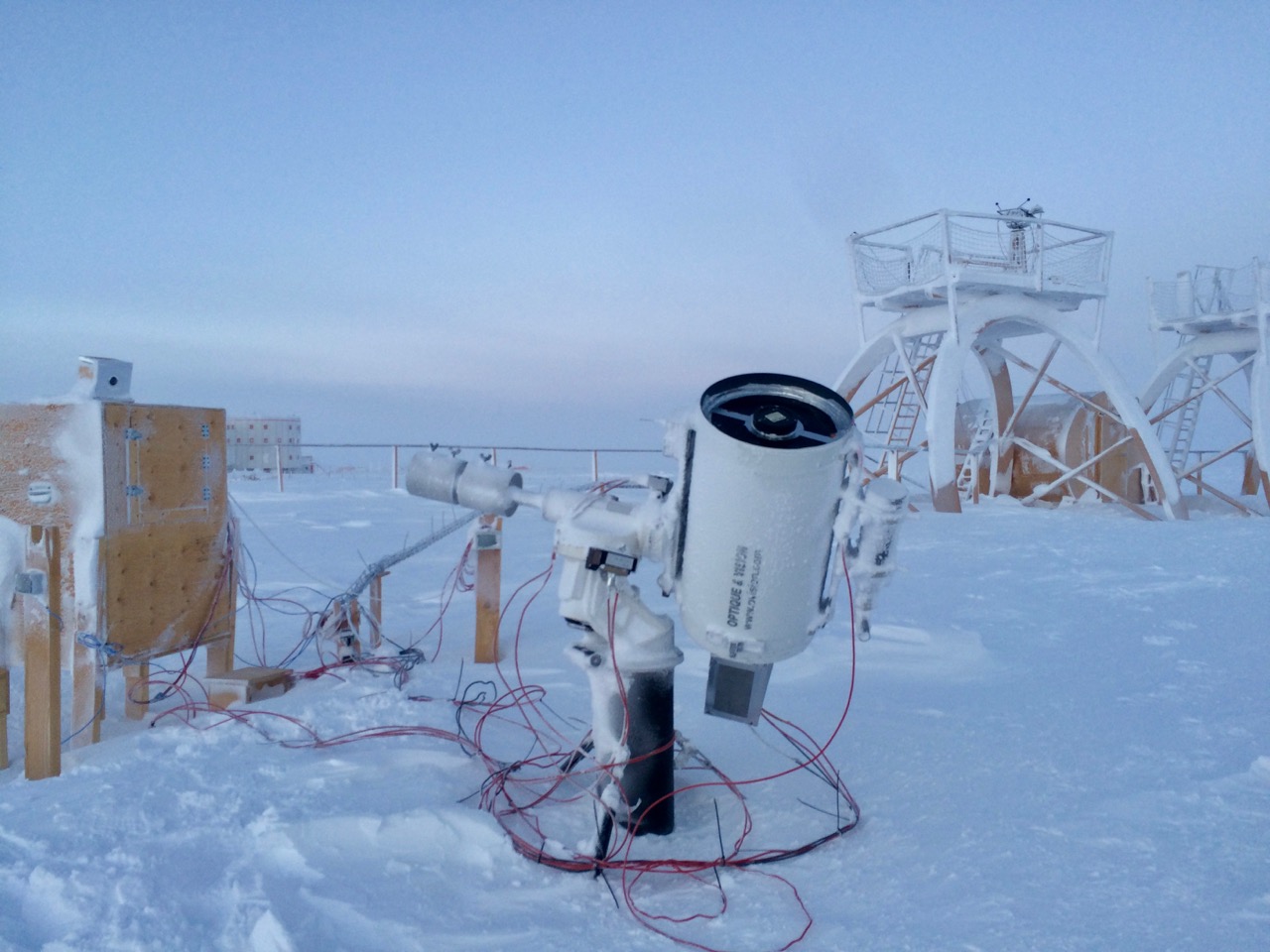
- Beta-pictoris transit monitoring is an international study led by a team of astronomers from the Université Côte d’Azur and the Observatoire de la Côte d’Azur in France, using the ASTEP telescope (Antarctica Search for Transiting Extrasolar Planets). ß pictoris is a young star in the constellation Pictor, and is located 63.4 light years from our solar system. It is 1.75 times as massive as our sun, and 8.7 times brighter, but is much younger: 20 million years versus 4.6 billion years for our sun. An exoplanet 7 times the mass of Jupiter, ß Pictoris b, was discovered orbiting ß pictoris in 2008. Calculations have hinted that the planet ß Pictoris b should transit in front of its star (relative to us) this year. The telescope will record the star’s photometric variations. If this transit phenomenon were observed, it would enable astronomers to make inferences about the physical properties of the planet and its atmosphere, whether it might have moons and whether the star possesses rings or a disk. The scientists will take advantage of the 3-month continuous polar night at Concordia to make astronomical observations, and hope to understand more about the formation of planets in young systems.
- The Paix programme stands for Photometer AntarctIca eXtinction. It is led by astronomers from the Université Nice Sophia-Antipolis and the Observatoire de la Côte d’Azur in France, in collaboration with world-wide teams. It aims to record photometry (stellar oscillations and pulsations) for variable stars during extended periods of time and at different wavelengths, collecting simultaneous multicolor light curves of several targets. Its main advantages are continuous observations during the polar night, and relative ease of repair and lower costs than observations from space. Dome C has previously been characterized as an exceptional site for astronomical observations, because of a combination of high altitude and therefore less dense atmosphere, low temperatures with low water vapor content, low cloudiness or light pollution, pure air and relative paucity of auroras compared to the rest of Antarctica. The observations should ultimately lead to a better understanding of the internal structure and composition of stars, hydrodynamics of their atmosphere and ultimately the evolution of stars and globular clusters.


 75 Degrees South