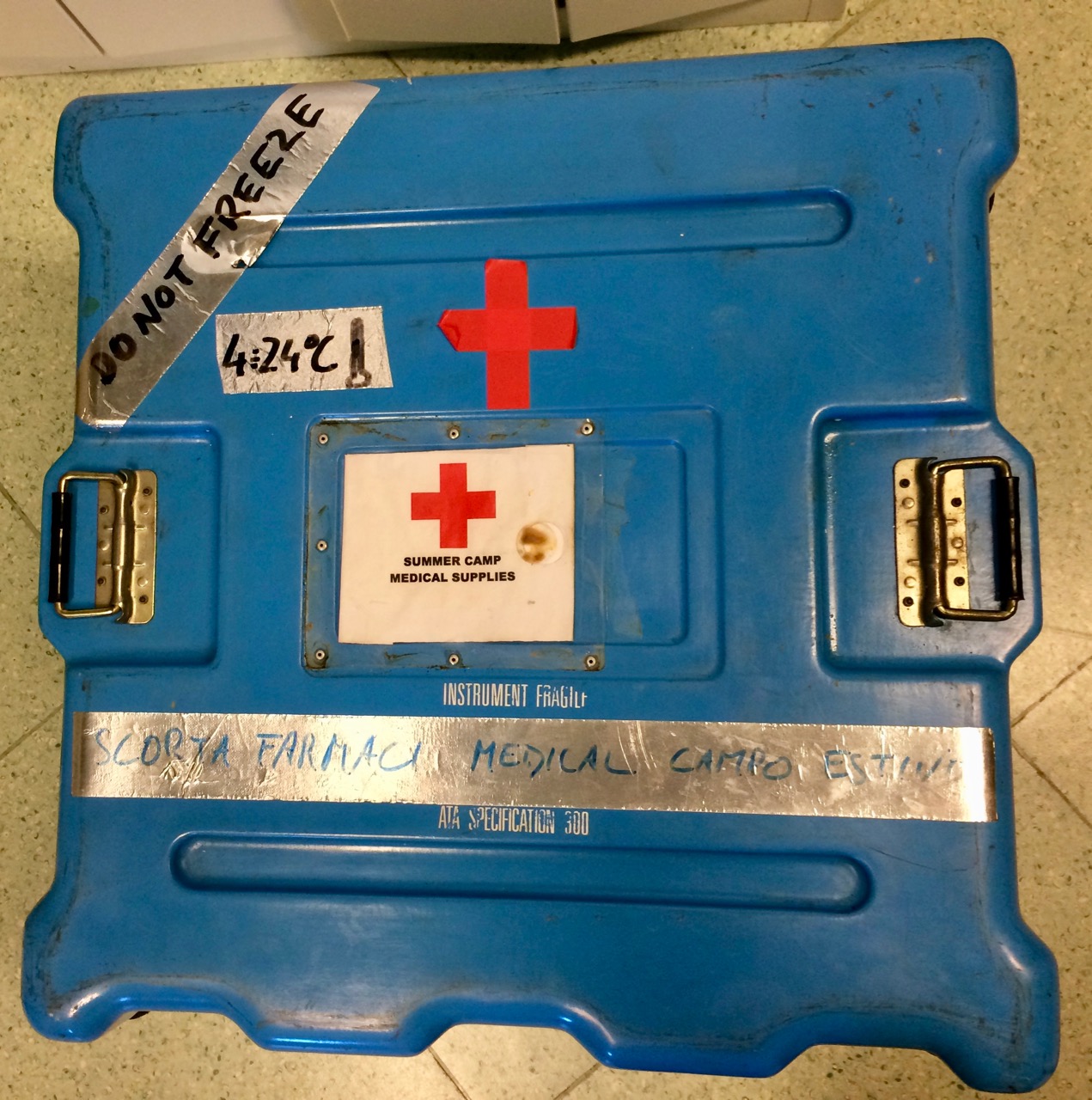
Even though my primary objective at Concordia is carrying out research, I cannot let go of the fact that I am a physician first and foremost. I therefore take every opportunity I can to visit the hospital and observe what my medical colleagues are confronted to and how they manage. Although we are extremely distant from any large medical facilities, the Concordia hospital is far from my idea of “bush medicine”. The equipment is very exhaustive; it includes a surgical room with the possibility of performing a general anesthesia, a dentist section, telemedicine devices, and everything needed to perform X-rays and simple blood or urine analysis. This is all of course mandatory because during the 9 months of isolation, we cannot be evacuated, even for emergencies. We will therefore need to be entirely self-sufficient for any medical or surgical situation that might arise, just like if we were going to Mars!
The typical problems the doctors see during the summer campaign are handling injuries such as crush fractures and excoriations, frostbites, colds and quite a few tooth issues. Since we are at the equivalent of 3800 meters, a few people also suffer from acute mountain sickness in the first few days after their arrival. The oxygen tanks are therefore available first-hand when a plane lands… The doctors discuss any slightly serious injury with referring teams back home. The likelihood of an evacuation has to be brought up quickly, since even during the summer campaign planes are not always available. We are at the mercy of bad weather not only at Concordia but also on the coast and at “midpoint”, and throughout the summer season, the planes are extremely busy transporting cargo and people in between all the research stations.
I am merely an observer for all things medical, but am responsible for retrieving any injured person in the station or on the grounds, and bringing them back safely to the hospital. I am the equivalent of Concordia’s “ambulance” team! During the summer, I have to fulfil this duty for one minor trauma incident. The retrieval process confirms what I had learnt in Chamonix; the importance of precise and calm communications, organization, and removal of the injured from the cold environment as a priority.
Throughout this year, I definitely hope to learn a little more about “extreme” and remote medicine, but also cross my fingers that the extensive medical tests all the winter-over crew are submitted to will guarantee our good health for the coming months!
 75 Degrees South